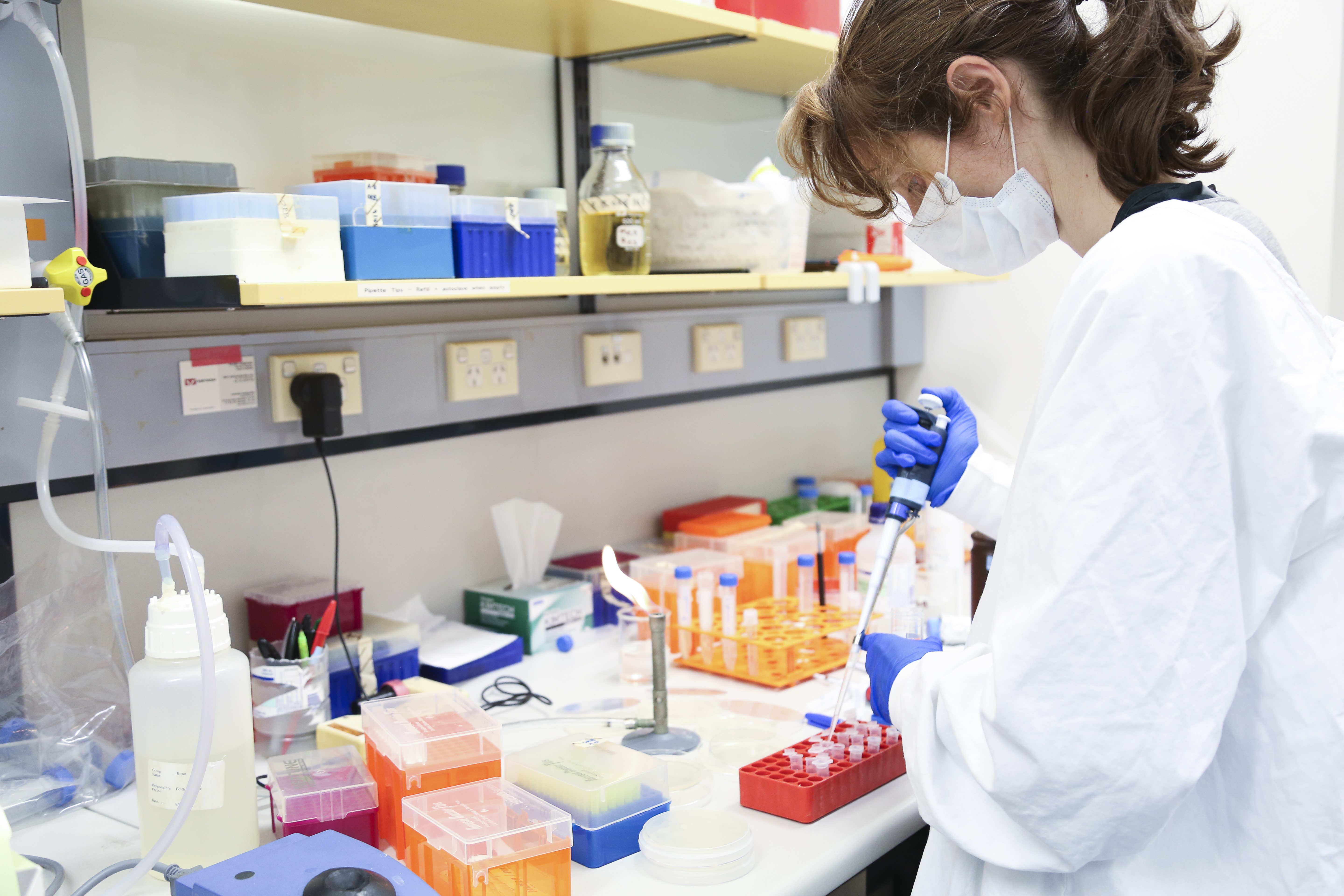
Your support is helping researchers from the Network, along with partner organisation, the Children's Medical Research Institute, to accelerate world-leading gene and gene-modified cell therapies to help children with rare diseases.
Gene therapy involves a once-only injection and has the potential to transform the lives of children.
Expert clinicians and families have witnessed the incredible benefit of giving Zolgensma to children with spinal muscular atrophy, a devastating life-threatening condition that leads to the rapid loss of motor function in the first year of life. Children receiving this therapy are now walking and developing normally at age two.
Another example is ocular gene therapy, which involves an injection into the retina of children who are deficient in the RPE65 protein and at risk of blinding eye disease. The therapy has lead to the partial restoration of the vision in two teenagers allowing them to see stars for the first time in their lives.
Leading researchers have unique opportunities to develop novel gene therapies focused on rare genetic diseases of the liver, eye and brain – the latter of which can lead to childhood dementia.